




A cataract surgery that used to depend entirely on a surgeon’s steady hand can now be guided, millimeter by millimeter, by a laser. That is the shift robotic cataract surgery is bringing to operating rooms in India, and it’s now available right here in Bangalore.
If you or a loved one has been told cataract surgery is on the horizon, you’ve probably also heard the same worries on repeat: how long is recovery, how precise is “precise,” and is the newest technology actually worth it. Shekar Eye Hospital in J.P. Nagar recently introduced robotic cataract surgery using Alcon’s LenSx laser system, and it’s a good moment to unpack what that actually means for patients considering the procedure in Bangalore.
What Makes Cataract Surgery “Robotic”?
Traditional cataract surgery relies on a surgeon manually creating incisions and breaking up the clouded lens using handheld blades and instruments. It’s a well-established, safe procedure that has restored sight for millions of patients over decades.
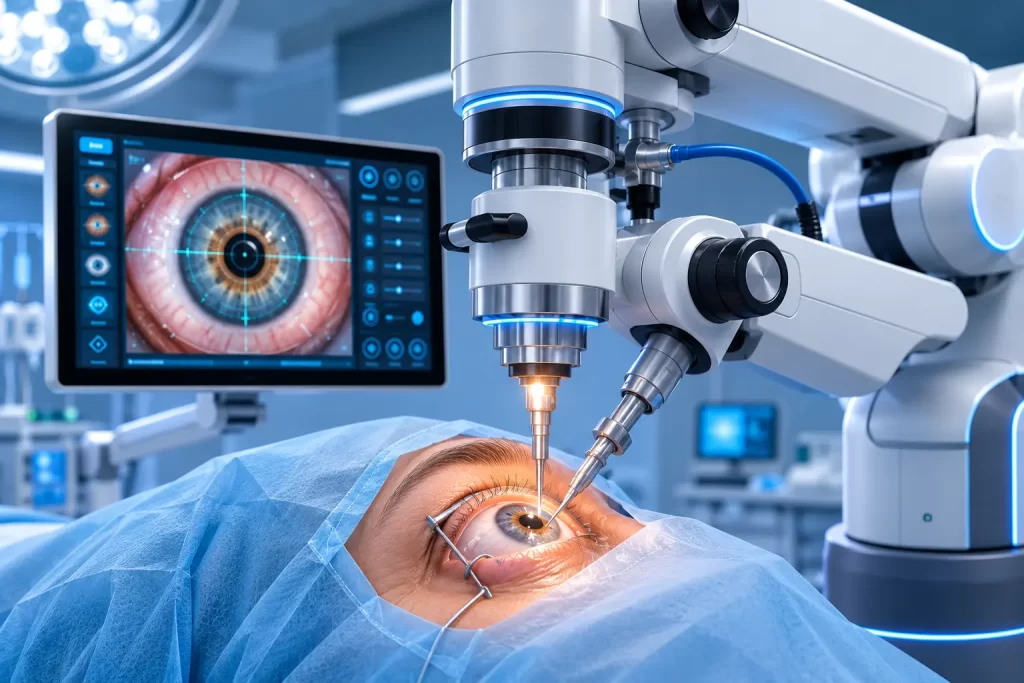
Robotic, or laser-assisted, cataract surgery adds a femtosecond laser to the process. Instead of a blade, the laser uses real-time imaging to map the eye and perform key steps of the surgery — creating incisions, softening the cataract, and preparing the lens capsule — with a level of precision that is difficult to replicate by hand alone. The surgeon still leads every stage of the procedure; the laser simply extends what the human hand can achieve.
Why It Matters for Cataract Surgery Patients in Bangalore
For patients weighing cataract surgery in Bangalore, the appeal of laser-assisted technology usually comes down to three things:
1. Precision Tailored to Your Eye
Every eye is shaped a little differently. The laser system builds a 3D image of the eye before surgery, allowing incisions and lens positioning to be planned around that specific anatomy rather than a general approach.
2. A Gentler Approach to the Lens
Because the laser handles some of the more delicate steps, there’s typically less manual manipulation inside the eye during surgery, which many patients and surgeons associate with a smoother surgical experience.
3. Consistency, Surgery After Surgery
A laser follows the exact plan mapped out for that eye, every time. That consistency is part of why hospitals are increasingly offering it alongside traditional cataract surgery rather than as a replacement for surgical skill.
Is Robotic Cataract Surgery Right for You?
Not every cataract requires the same approach, and that’s a conversation worth having with your ophthalmologist rather than deciding based on technology alone. Factors like the density of the cataract, your overall eye health, and any coexisting conditions such as diabetes or glaucoma all play a role in the recommendation.
At Shekar Eye Hospital, this decision is made the same way any treatment plan is through a detailed pre-surgical evaluation with one of our ophthalmologists, so you understand exactly why a particular approach is being recommended for your eyes.
What to Expect at Shekar Eye Hospital
Shekar Eye Hospital has been providing eye care in Bangalore since 1999, and as a NABH-accredited institution, our cataract program combines that experience with newer technology like the LenSx laser system. Patients considering cataract surgery here can expect:
- A comprehensive eye evaluation before any surgery is scheduled
- A clear explanation of whether laser-assisted or traditional surgery best suits your eyes
- Surgery performed under the guidance of experienced ophthalmologists
- Structured post-operative follow-up care
Because everything from diagnostics to the surgery itself to post-operative care happens under one roof in J.P. Nagar, patients don’t need to coordinate between multiple facilities during what can already feel like a stressful time.
Taking the Next Step
Cataracts don’t need to be a source of anxiety, and neither does choosing how to treat them. Whether the right path for you turns out to be robotic cataract surgery or the traditional approach, what matters most is getting an honest, experienced evaluation first.
If cataract surgery is something you or a family member are considering, book a consultation with Shekar Eye Hospital to find out which approach is right for your eyes.
Frequently Asked Questions
Is robotic cataract surgery more expensive than traditional cataract surgery?
Laser-assisted cataract surgery generally costs more than traditional surgery due to the technology involved. Exact pricing depends on your specific case and lens choice, so it’s best discussed directly during your consultation at Shekar Eye Hospital.
How long is the recovery after robotic cataract surgery?
Recovery timelines are similar to traditional cataract surgery for most patients, with many people resuming normal activities within a few days, though your surgeon will give you a timeline specific to your eyes and overall health.
Is robotic cataract surgery painful?
Cataract surgery, robotic or traditional, is performed with topical anesthesia (usually eye drops), so patients typically feel little to no pain during the procedure itself.
Who is a good candidate for laser-assisted cataract surgery?
Most patients with cataracts can be evaluated for laser-assisted surgery, but the final recommendation depends on factors like cataract density, pupil dilation and any other eye conditions, something your ophthalmologist will assess during a pre-surgical evaluation.