





Contact lenses can make everyday life easier. They give you freedom from spectacles, offer a wider field of vision, and can be especially convenient during travel, sports, or social occasions.
But there is one important catch: contact lenses sit directly on the surface of your eyes.
That means even a seemingly harmless habit like topping up yesterday’s solution or falling asleep without removing your lenses can increase the risk of irritation, inflammation, or infection.
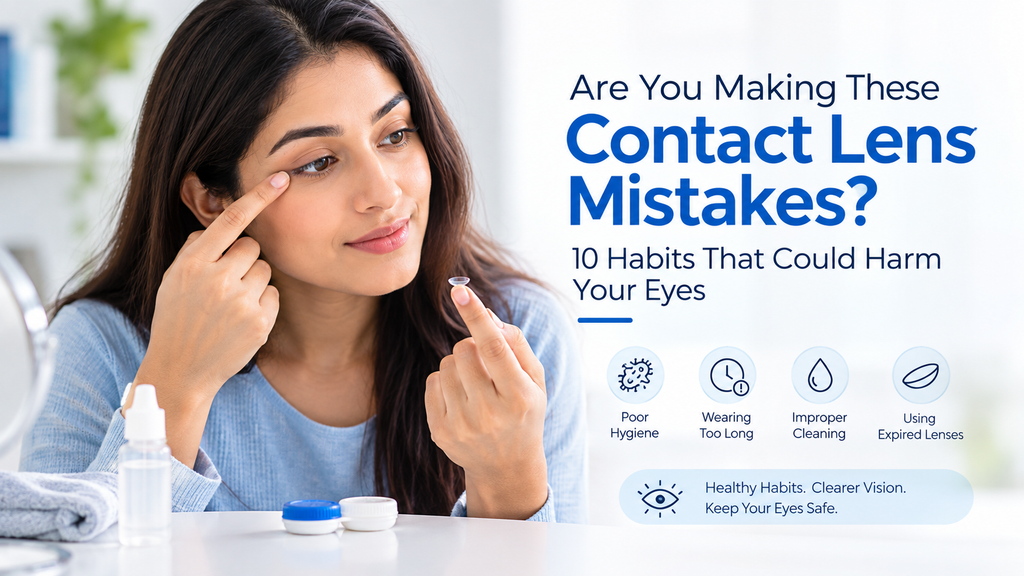
Good contact lens safety is not complicated. It simply requires consistency. Here are some of the most common contact lens mistakes you should avoid.
1. Never Handle Contact Lenses Without Washing Your Hands
Your fingers can carry dirt, oil, bacteria, and other microorganisms that may be transferred directly onto your contact lenses.
Always wash your hands thoroughly with soap and water before inserting or removing your lenses. Dry them using a clean, lint-free towel.
Avoid handling lenses immediately after using creams, oils, or cosmetics, as these can contaminate the lens surface.
Proper hand hygiene is one of the simplest but most important contact lens care tips.
2. Never Reuse Contact Lens Solution
This is one of the most common contact lens mistakes.
After your lenses have been stored overnight, discard the used solution completely. Do not reuse it or simply add fresh solution on top of the old liquid.
Used solutions may already contain microorganisms and debris from your lenses. Adding fresh solution does not make the old solution sterile again.
Always empty the case and use fresh disinfecting solution every time you store your lenses.
3. Don’t Use Tap Water to Clean Contact Lenses
Tap water may look clean, but it is not sterile.
Water can contain microorganisms that may cause serious eye infections. Contact lenses should therefore never be rinsed, soaked, or stored in tap water.
The same rule applies to bottled water and filtered drinking water.
Use only the contact lens cleaning or disinfecting solution recommended by your eye doctor.
4. Avoid Sleeping With Contact Lenses Unless Specifically Approved
After a long day, it may be tempting to simply fall asleep with your lenses still in.
However, sleeping with contact lenses can reduce the amount of oxygen reaching the cornea and increase the risk of irritation and infection.
Some lenses are specifically designed for extended wear, but even these should only be used overnight when recommended by an eye care professional.
If your lenses are meant for daily wear, remove them before sleeping even if you are only planning a short nap.
5. Don’t Wear Contact Lenses Beyond Their Recommended Replacement Period
If you use monthly lenses, replace them according to the recommended schedule. The same applies to daily, fortnightly, or other replacement lenses.
Wearing a lens longer than recommended can lead to deposits of protein, oils, and microorganisms building up on its surface.
Your lenses may still appear perfectly normal, but that does not mean they remain safe to use.
Follow the replacement schedule prescribed for your particular type of lens.
6. Avoid Showering or Swimming While Wearing Contact Lenses
Water and contact lenses are not a good combination.
Swimming pools, lakes, seawater, hot tubs, and even shower water can contain microorganisms. Water can also cause soft contact lenses to change shape or stick more closely to the eye.
If you accidentally expose your lenses to water, follow the advice given by your eye care professional. Depending on the lens type, they may need to be disinfected or discarded.
7. Don’t Ignore Your Contact Lens Case
Good contact lens hygiene includes taking care of the storage case as well.
After removing your lenses, discard the old solution and clean the case using fresh contact lens solution as instructed. Allow the case to air dry.
Cases should also be replaced regularly rather than being used indefinitely.
A clean pair of lenses stored in a contaminated case can still expose your eyes to microorganisms.
8. Don’t Wear Contact Lenses When Your Eyes Are Red or Irritated
Redness, pain, excessive watering, unusual discharge, blurred vision, or sensitivity to light should not simply be ignored.
Remove your contact lenses if you experience these symptoms.
Continuing to wear lenses over an irritated eye can make the problem worse.
If symptoms persist particularly pain, significant redness, light sensitivity, or reduced vision consult an ophthalmologist promptly. An eye infection from contact lenses can occasionally become serious if treatment is delayed.
9. Avoid Sharing Contact Lenses
Contact lenses are medical devices prescribed for an individual.
Never share them with friends or family members, even cosmetic or coloured contact lenses.
Sharing lenses can transfer microorganisms between users and may expose the eye to an incorrectly fitting lens.
Even lenses used purely for cosmetic purposes should ideally be selected after an eye examination and proper fitting.
10. Don’t Skip Regular Eye Check-Ups
Your contact lens prescription and your spectacle prescription may not necessarily be identical.
Contact lenses also need to fit the shape and surface of your eye properly.
Regular examinations allow your ophthalmologist or optometrist to check your vision, cornea, tear film, lens fit, and overall eye health.
You may feel completely comfortable while wearing lenses and still benefit from periodic professional evaluation.
Contact Lenses Should Feel Comfortable Not Something You Have to Tolerate
When used correctly, contact lenses can be a convenient and safe method of vision correction.
The key is not simply choosing a good contact lens. It is developing good habits around how to use contact lenses safely.
Wash your hands before handling lenses, use fresh solution every time, keep lenses away from water, follow the recommended replacement schedule, and never ignore eye discomfort.
Most importantly, remember that persistent redness, pain, blurred vision, discharge, or sensitivity to light are not normal contact lens symptoms.
If something does not feel right, remove your lenses and get your eyes examined.
Your contact lenses are replaceable. Your eyes deserve considerably more care.
Frequently Asked Questions
Can I sleep for one hour while wearing contact lenses?
It is generally better to remove contact lenses before sleeping or napping unless your eye care professional has specifically recommended lenses approved for overnight or extended wear.
Can I wash my contact lenses with water?
No. Contact lenses should not be cleaned or stored using tap, bottled, or filtered water. Use only the recommended contact lens solution.
Can contact lenses cause eye infections?
Yes. Improper hygiene, water exposure, sleeping in lenses, wearing lenses longer than recommended, or using contaminated lenses or cases can increase the risk of infection.
How often should I change my contact lens solution?
Use a fresh solution every time you store your lenses. Never reuse old solutions or simply top it up with new solutions.
Should I stop wearing contact lenses if my eyes become red?
Yes. Remove the lenses if you develop significant redness, pain, irritation, discharge, blurred vision, or light sensitivity. If symptoms continue, consult an ophthalmologist.
Is it safe to wear contact lenses every day?
Many people can safely wear contact lenses regularly when they are properly fitted and used according to professional instructions. Wearing time and lens type should be based on your eye health and your eye care professional’s advice.