





In today’s digital age, screens are everywhere—from smartphones and tablets to televisions and laptops. For parents, managing a child’s screen time has become one of the biggest challenges. While technology offers educational and entertainment value, excessive screen exposure can take a toll on children’s physical, emotional, and especially visual health.
This blog outlines expert-backed screen time guidelines, practical tips for parents, and eye care precautions to help protect your child’s development in a screen-dominated world.
Why Screen Time Matters for Children’s Eye Health
Children’s eyes are still developing, making them particularly sensitive to prolonged exposure to digital screens. Unlike adults, they may not recognise or communicate early signs of eye strain such as dryness, irritation, or blurred vision. Over time, excessive screen time can lead to:
- Digital eye strain
- Dry eyes due to reduced blinking
- Poor posture-related neck and back issues
- Delayed physical development and lack of social engagement
To prevent these, it’s essential for parents to understand age-wise screen time limits and adopt proactive strategies.
Recommended Screen Time by Age – Indian Academy of Pediatrics
The Indian Academy of Pediatrics (IAP) provides clear, research-backed screen time guidelines for children:
- Children under 2 years: No screen time is recommended. At this stage, interaction with caregivers and physical exploration are crucial for development.
- Children aged 2 to 5 years: Limit screen time to a maximum of 1 hour per day. Choose high-quality content and watch together to make it more interactive and meaningful.
- Children above 5 years: Should not exceed 2 hours of recreational screen time per day. Prioritise educational and skill-building activities when possible.
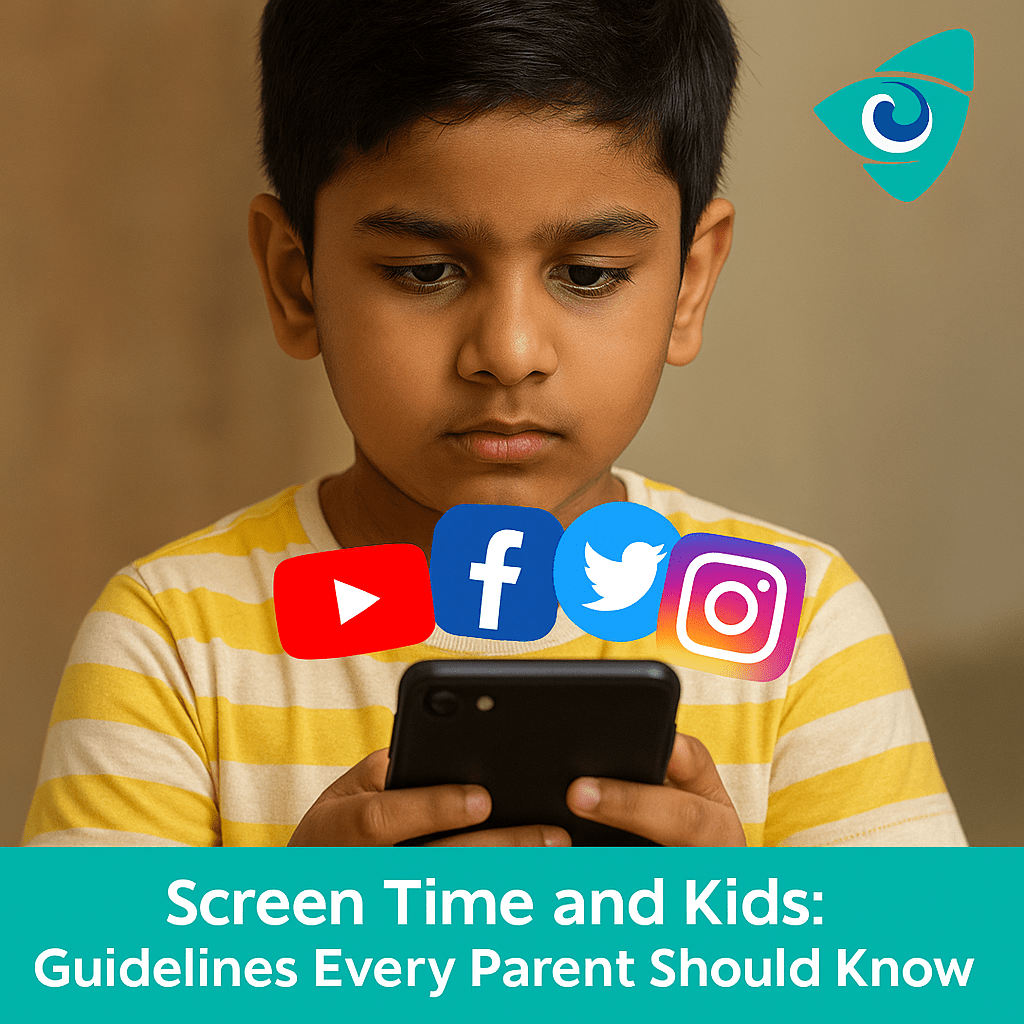
The Impact of Excessive Screen Time
Extended screen exposure can have a range of side effects on children, including:
- Visual fatigue and eye strain
- Increased risk of myopia (nearsightedness)
- Disrupted sleep cycles due to blue light exposure
- Behavioural issues like irritability or attention problems
- Reduced physical activity and outdoor playtime
- These concerns are not just hypothetical—eye hospitals across the country are seeing rising cases of dry eyes, screen-induced headaches, and vision problems in children as young as 6 or 7.
Practical Screen Time Guidelines for Parents
To manage screen time in a healthy, balanced way, consider these expert-approved tips:
1. Keep Screen Time to a Minimum
Use screens only when necessary. Encourage more face-to-face communication, creative play, and outdoor activities to reduce dependency on gadgets.
2. Encourage Distant Viewing
Prefer screens like televisions placed at a distance over handheld devices such as smartphones and tablets, which are harder on the eyes.
3. Ensure Proper Lighting
Avoid using screens in dark rooms or under harsh glare. Balanced ambient lighting helps reduce strain on the eyes.
4. Teach the 20-20-20 Rule
Encourage children to look away from the screen every 20 minutes and focus on something 20 feet away for at least 20 seconds.
5. Remind Children to Blink
Blinking keeps eyes moist and refreshed. Children tend to blink less while staring at screens, leading to dryness.
6. Promote Good Posture
Encourage sitting upright with the screen at eye level. Avoid slouching or lying down while using devices.
7. Set Tech-Free Zones
Designate areas like bedrooms and dining tables as screen-free zones to promote mindful living.
8. Use Parental Controls and Schedulers
Many devices and apps allow you to monitor screen time and set limits. Make use of these tools to build healthy routines.
Alternatives to Screen Time for Younger Children
For children below 5, screen time should be actively discouraged. Instead, foster healthy habits that support overall development:
- Storytelling and personal interaction
- Arts and crafts to enhance creativity
- Physical play like running, climbing, and jumping
- Interactive board games or puzzles
- Helping in simple household chores to build responsibility
These activities not only keep their eyes safe but also contribute to cognitive growth, emotional bonding, and social skills.
Making Screen Time Quality Time
If your child must engage with screens, ensure the content is age-appropriate, educational, and ideally co-viewed with an adult. Here are a few additional tips:
- Watch together and ask questions to promote engagement.
- Limit passive consumption, like aimless scrolling or binge-watching.
- Encourage interactive apps that involve thinking and problem-solving.
- Schedule regular outdoor time to balance screen usage.
When to Consult a Doctor
If your child complains of the following, it’s time to consult a paediatric ophthalmologist:
- Frequent headaches or eye pain
- Excessive blinking or rubbing of eyes
- Watering or redness in eyes
- Difficulty focusing on distant objects
- Complaints of blurry vision or double vision
Early intervention can prevent long-term complications and help build healthy screen habits for life.
Conclusion: Balance Is Key
In a world where digital screens are almost impossible to avoid, especially for school-going children, it’s important to focus not just on screen limits—but on balance, quality, and health. As a parent, you play a vital role in setting the boundaries and ensuring your child’s screen time doesn’t come at the cost of their eye health, social development, or well-being.
By following simple screen hygiene habits and sticking to age-appropriate screen time limits, you can help your child navigate the digital world safely and healthily.
Frequently Asked Questions (FAQs)
1. What is the ideal screen time for school-going children?
Children above 5 years should not exceed 2 hours of recreational screen time per day, according to the Indian Academy of Pediatrics. Educational screen use should be balanced with sufficient breaks, outdoor activity, and good screen hygiene.
2. Can screen time cause permanent eye damage in kids?
Prolonged and unregulated screen time can lead to eye strain, dry eyes, and early onset of myopia. While not always permanent, these issues can worsen over time if not addressed early with the right precautions.
3. How can I encourage my child to reduce screen time?
Make screen-free time engaging by involving your child in storytelling, outdoor games, arts and crafts, or cooking. Set a family routine with tech-free zones and lead by example by reducing your own screen use.